Friday 12 August 2022 – We’re now aboard Silver Muse and underway. This is the view from our cabin’s balcony right now (it has been like that ever since we left Seward); appropriately we are in Disenchantment Bay. (It improves – keep reading.)
We’re not missing anything right now, therefore this is a fantastic opportunity to bring you up to date with how everything went yesterday.
This being a holiday, we were up earlier than would normally be the case at home. OK, the jetlag helped. Thing is, we needed to hand our luggage over to the nice Silversea people, conveniently located at a desk in the hotel lobby, between 8am and 9am, which means 8am ‘coz we always want to give ourselves maximum contingency for cock-ups. As well as handing over the suitcases, we had to prove that we were free of the Dreaded Lurgy and that we had ‘fessed up to the Canadian authorities about our imminent arrival in a week’s time. Jane, as always, had done a mistressful job of marshalling the necessary paperwork, which left the Silversea folks almost as impressed as I was.
It was our lot to travel by rail down to Seward, where the boat would leave. We actually had no particular idea about whether this was better or worse as an option than traveling by coach, but, whatever, we had to be ready to be picked up at 1215. This gave me the opportunity to finish writing about our day in Anchorage on Wednesday, which had been sufficiently eventful that it took two days to write it up.
The rail trip to Seward starts, somewhat counterintuitively, from the airport. There are no scheduled trains from Anchorage to Seward, so this was a Silversea Special and it departed from the rail depot at the airport (presumably needed because of the massive logistical significance of Anchorage as a hub). A coach took us to the airport, where we joined a queue to prove, once again, that we had the paperwork, then another queue to get a boarding pass for the train and our cabin keys. There was a holding pen whilst we waited to board the train
and then we were called by carriage number. They called carriage 555 first, and we were carriage 554, so held ourselves in readiness to sprint forward. Then they called….carriage 553. No matter, they hadn’t forgotten us and we were next to take the walk down the platform.
The carriage had big observation windows
and for the journey we had the pleasure of the company of the two ladies bottom right, Rebecca and her mother Margaret. Notice that there’s nowhere to put bags, so my super-heavyweight backpack had to be stashed somewhere else.
The carriage was run by a chap called Christian, who did the best he could to gee everyone up with tales of possible sightings of moose and eagles and bears and that, but his news that the train trip was going to take four and a half “ish” hours came as a bit of a surprise. The weather conditions also quite literally dampened expectations of fabulous and interesting views.
Christian started serving people from the far end of the carriage and it became clear that it would take him some time to work his way up to our end. Happily, we discovered that we were next to the buffet car, which was rather like any British Rail buffet car except the lady serving behind the counter knew how to mix cocktails. We satisfied ourselves with a hat trick of G&Ts before we were able to get a salad via Christian’s service, and that nicely lubricated the conversation with Rebecca and Margaret as we ground our way slowly along.
The most interesting challenge, photographically, was seeking a gap among the trees in order to get a photo. The train might have been moving slowly, but the gaps between the trees seemed to flash right by. I managed one glacier
and one lake
and that was about it (no moose or eagles or bears), which meant that by the time we got to Seward we were beginning to feel rather bored with the whole process. I don’t know whether the coach option might have been swifter, but we were all glad to get to Seward, where the weather conditions (as forecast)
weren’t all that conducive to any further beautiful photography. Scurrying from the train to the boat was actually a higher priority
and, naïve soul that I am, I was surprised at the size of the ship.
The boarding process was very smooth and it was soon clear that we were going to be very well looked after during our cruise. Every cabin has a butler; ours is called Francis and he came and introduced himself and talked us through some of the information we’d need throughout our cruise. We also found the launderette, which is a nice thing to have the use of. These things are important, you know.
The rest of the day was taken up with the inevitable and important safety briefing and dinner, which we took in a restaurant called Atlantide.
Great food, nice surroundings and efficient and courteous service. After dinner, we thought it would be good to stretch our legs, so we walked around the ship to orientate ourselves. It’s a big ship in our experience, but quite small in the general cruising context – a maximum of 596 guests if full. Relatively small as it is, it’s still an 11-story building so there was a lot to take in.
We learned from one steward (Simon, German) that there are 437 guests on this cruise and somewhere around 360 crew, so the service level is near one-to-one; also that even if the numbers had been higher post-pandemic, the ship would not have been full, as they have to reserve some cabins for quarantine purposes. The pandemic’s consequences continue to affect the hospitality industry, even after all this time.
The strains of the day began to tell, and even the prospect of further free booze wasn’t enough to keep us going, so we called it a day at this point and got our heads down in order to prepare for a day at sea containing the prospect of seeing the Hubbard Glacier at reasonably close range from the ship. We therefore hoped for decent weather, not something that we’d seen thus far. However…..
….the skies have cleared, making today’s activity a bit more promising. I’ll write about that in the next post, so do come back and find out more, won’t you?
Anchorage! Such a lot packed into a single day! I recommend you get yourself a stiff drink and settle in for a long session if you want to read this at a single sitting.
The main task for the day was to take a Covid test as a pre-requisite for being allowed to join the cruise that starts tomorrow. We’d tried to pre-empt it yesterday by going to the Egan Congress Center in the optimistic hope that the testing facility might be open. It wasn’t – we’d arrived too late – but at least we now knew where the testing facility was. Optimism ruled our hearts once again as we headed there just after 8am today hoping that it might be open. Again, the Congress Centre appeared to be still closed, so we retired to the hotel for breakfast before trying again just after 9am, by which time it had opened its doors. The testing process was efficient – a QR code to register on-site, test kits ready to hand out, a promise of results by e-mail within 20 minutes and contactless payment to relieve you of the fee – $89 per person, which is a scandalous amount, but if it gets us on to the boat, then that’s a win.
By the time we’d walked the two blocks back to the hotel and got a coffee from the lobby café, the results were in, and we were officially declared free of the Dreaded Lurgy, which should make the blog entries for the next few days a little more interesting than they might otherwise have been. To add further to our joy, the sun had come out and the day was warming up nicely. We had decided to take a Trolleybus Tour to give us some idea of what Anchorage had to offer, so we wandered off in the general direction of the Visitor Center to see what the deal was.
The Visitor Center features a log cabin, which is quite fetching, particularly when viewed through the Spirit Bridge, a 1985 sculpture by Roger Barr.
You can also see our hotel in the background. Nearby the Visitor Center is a hot dog stand with some interesting wares.
Had we not just had breakfast, the spicy reindeer dog would have exerted a strong draw, I think. Also by the centre is a statue along a rather common theme in these here parts.
Wherever you look, it seems there are references to bears. Our hotel’s bar/restaurant is called Bruins, for example, and just outside its doors is the reason why.
Trolleybus tour operators proselytise tirelessly outside the center, happy to explain what was on offer, and they proved as efficient at parting us wirelessly from our dollars as was the Covid Test site. The deal we settled on was the Luxury version of the tour, distinguished from the standard version by occasional stops with the opportunity to get off and take photos. That started at midday and it was just 10.30 when we bought the tickets, so we had an hour and a half to kill. This we did by our normal tactic of Going Off For A Wander. We had a vague idea of a direction to go in, as we’d seen some pleasant-looking timber houses on the taxi ride in from the airport. Jane accordingly navigated us in the general direction that we thought we might have seen them.
On the way, we passed some quirky street art touches,
the local take on Barcelona’s Sagrada Familia, the Sacred Family Cathedral of Anchorage
and the Veterans Memorial
before reaching the area we’d sought, which did indeed have a very nice selection of timber buildings.
By this stage we were at Delaney Park, a long stretch of green space between 9th and 10th Avenues, which was originally cleared in the early 20th century as a firebreak to stop the wildfires that are part of the warp and weft of life in Alaska from destroying the developing city. From the park, you can see distant mountains.
We passed the First Presbyterian Church
and “556”, an S-160 class steam locomotive built in 1943, one of 2,300 built for the American army and missing the typical steam engine domes because many were used for the war in Europe and Africa, where tunnels and bridges were lower than in the USA.
(Very creative use of rolling stock wheels for seating purposes, I thought.)
Around here, we met a Friendly Native (there seem to be plenty of them hereabouts – it’s a very amiable place) who suggested a couple of things we should have seen, so we tucked them away for future use after we’d finished our trolleybus tour. As we worked our way back towards the tour meeting place, we passed some striking murals.
The Trolleybus tour was delightfully led by a lady called Donna who was a mine of interesting information, leavened by very good humour.
One of the strongest threads running through her commentary concerned a major event, not only for Alaskans, but with global impact – the 1964 Earthquake. This was absolutely massive – 9.2 on the Richter scale, thus the most powerful earthquake recorded in North American history, and the second most powerful earthquake recorded in world history. Six hundred miles of fault ruptured at once and moved up to 60 ft. Post-quake tsunamis severely affected Whittier, Seward, Kodiak, and other Alaskan communities, as well as people and property in British Columbia, Washington, Oregon, and California. Tsunamis also caused damage in Hawaii and Japan. Evidence of motion directly related to the earthquake was also reported from Florida and Texas. The repercussions even caused church bells in Johannesburg to ring. It is a candidate to be the third most massive shock to the planet after the Chicxulub meteorite which did for the dinosaurs 66 million years ago and the meteorite which exploded over Antarctica 430,000 years ago.
The incredible thing about the Alaskan earthquake is that although property damage was huge, very few people in Anchorage were killed, because it happened on Good Friday – schools and businesses were closed and the areas affected were largely deserted.
The tour route took us to the James Cook monument, where Donna gave a summary of the huge (but not quite earth-shaking) impact that Cook had had on our knowledge of the world in the 18th century;
he discovered and mapped Alaska as he searched for the fabled North Western Passage that, were it found, would open up trade to Asia. The monument site offers views across the water to distant mountains
and to the “Sleeping Lady”, Mount Susitna, which has an Athabascan mythical story attached to it.
From there, we went to Earthquake Park, where the Pacific and American tectonic plates meet, enabling someone to stand with a foot on each.
A short walk into the woods reveals the waves that were caused as the surface moved up and down during the earthquake.
Shortly afterwards we came to the point on the coast which enables a view back over downtown Anchorage
as well as two significant mountains over the water – Denali, also known as Mount McKinley, on the right in this picture
and Mount Foraker on the left. Denali, at over 20,000 feet, is the highest mountain peak in North America, as well as the third most prominent and third most isolated peak on Earth, after Everest and Aconcagua (in Argentina).
The route back to town took us past Lake Spenard (named for Joe Spenard, a significant player in the development of Alaska in the early 20th century) and the site of a vast number of “float planes”.
Aeroplanes are hugely important in Alaska, as they are often the only way to reach places because building roads is made difficult by the permafrost which is often only feet below the surface in the state. Trying to develop on such land is challenging as the permafrost melts, meaning you’re now trying to build on water.
The lake is near to Anchorage’s international airport, and one can see huge warehouses in the area, which belong to logistics giants such as Fedex and UPS. This comes about because Anchorage has a critical role to play in the air freight business. Since it’s a maximum of 9 air hours away from the majority of the planet’s major cities, going via Anchorage is often the most efficient way to move cargo. It’s notable that the airport was at its busiest during the pandemic as delivery operations became more and more important to people who were in lockdown.
And that was our trolleybus tour – fascinating and entertaining.
We’d learned so much – and it was only lunchtime! We headed to the Glacier Brewhouse, a recommendation from the hotel receptionist, which served us a very agreeable lunch, and then, in order to take advantage of the superb weather, went out and about again.
Going along with the recommendations from our Friendly Native, we headed back down to Delaney Park and struck out west towards the water’s edge. We’d already seen one Interesting Church (the Presbyterian one) and we soon passed another, the First Baptist Church.
I wonder if there’s a link between being in the far north and building interesting churches – we’d seen a plethora in Iceland also.
We worked our way along the length of the park (which is 14 blocks from end to end) and came to the water. We’d planned to take a path back along beside the water but there was the inconvenient matter of a railway between us and it. So we zig-zagged our way back up towards the city in search of the place where the path crosses the track so we could join it. There was a steady stream of interesting and attractive buildings.
Outside the one shown just above, we noticed that the trees are encircled by metal. This is to protect them from moose, which would otherwise simply eat them.
Moose play a more important role in Alaskan life than simply being a road hazard in the winter. They wander quite freely and whilst they’ll eat practically any vegetation, they have a special relationship with willow; not the weeping willow that’s familiar in the UK, but feltleaf or diamond willow. And there’s a link with the original firebreak role for Delaney Park. It’s an interesting, but complicated story.
Willow trees shed their leaves every year, and the leaf mould is gradually compacted over the years by the snow, eventually forming a thick layer of a substance called duff, which prevents further growth. When the duff dries out in summer, lightning strikes can cause it to burn, giving rise to the wildfires which are common all over the state. These clear the duff, allowing for new willow growth which is food for moose, which, in turn are food for the apex predators – wolves and bears. Moose are unusual in that they can eat the bark as well as the leaves of willow, which is why it plays such a key role as a foodstuff. But protection round trees is a common sight, as mooses’ appetites aren’t limited just to willow.
Another botanical nugget concerns “fireweed” – what we’d call rosebay willowherb. This can be found growing all over
and according to local lore, each year the height it grows to predicts the depth of the snows in the coming winter. (Our guide Donna’s family did a project over 15 years of monitoring this, and she asserted that this was true each year they measured it to within an inch or two.)
The final chapter of this extraordinarily content-filled day concerned salmon, a high-profile industry in Alaska. The salmon harvest in Alaska is the largest in North America and represents about 80% of the total wild-caught catch, with harvests from Canada and the Pacific Northwest representing the remainder. You can see salmon all over the place as artwork
but, more to the point, this is the time of year where they run upriver to spawn and Donna had told us about a place where we could maybe see them in action – the Ship Creek Overlook Park. This was the final stop on our walkabout. We made our way to the bridge which offered the best viewing possibilities and, sure enough, there they were, in profusion.
But, accompanying this was the (very laid-back) cabaret of people fishing for salmon in the river. There were lots of them
and indeed watching them appears to be a spectator sport, too.
There’s a restaurant built on a bridge over the river
(Ulu is derived from an indigenous people’s word for knife, apparently).
And this completed the walkabout for the day. We’d covered around nine miles as well as going on the bus tour and our brains were full of all the things we’d learned and the sights we’d seen. For such a small town, Anchorage had given us a marvellous and varied day out, enhanced by some lovely weather.
I’ve just taken a look at the forecast for Seward, which is where we will board our cruise, some 120 miles south of Anchorage. It looks like it will be raining there, not only when we arrive, but for the whole week, which emphasises how fortunate we have been today.
Tomorrow, then, will be taken up by the transit to Silver Muse and the concomitant fuss about boarding, and getting to know the layout of the ship (particularly where we can find gin). So it will be a couple of days before I report anything, and, given the length of this entry, I should think you’re quite relieved about that. Anyway, do come back in a couple of days to see how we’ve got on, won’t you?
Tuesday 9 August 2022 – If you’ve read yesterday’s installment you’ll know that we reached Heathrow with no problem beyond the usual apprehension that bedevils us in the quiet time before the taxi arrives for major travel. The rest of Phase 1 of the journey – getting out of the UK and into Vancouver – was generally very agreeable and entirely crash-free. The Air Canada plane was, I think, quite new and certainly spiffy, with little touch screens for doing everything: selecting in-flight entertainment, controlling the aircon, configuring the seat.
The choice of in-flight entertainment movies was very impressive. I didn’t count the total offering of films, but I reckon it must have been around 100 – new releases, classics and cult offerings. My normal choice is to for escapist rubbish, typically out of the Marvel stable, but I noticed something that really took my fancy, standing out because it was first in the list due its name – A Hard Day’s Night. I wonder if there’s anyone out there who doesn’t know that this is a Beatles film? It’s not a classic, but the songs in it are classic early Beatles numbers from 1964. The nostalgic sentimentalist urges which lurk embarrassingly close to the surface within me immediately settled on this as the first film to watch.
(The Beatles LP that featured the film’s songs was the first 12″ LP that I ever bought. It was expensive – 32/6d, or £1.63 in modern currency – and I treasured it. Until I gave it away, that is. I think my brother took it off my hands when I decided that I was only interested in classical music, which was in turn before I became a fan of prog rock before turning back to classical music. Musically, I’m just a tart.)
(Another parenthetical note. 32/6d is nearly 97 Mars Bars – they cost 4d in those days if memory serves. Today, a Mars Bar is 65p, meaning that the equivalent cost to me, a 12-year-old was just a whisker under £63. Never let it be said that LPs are expensive these days.)
I actually went to see the original Hard Day’s Night film in the cinema, and, on watching it again, realised how much about it I had forgotten. It’s a Richard Lester musical comedy film, and so its credentials are reasonably good. Although it doesn’t stand up to today’s cinematography in any way, I hugely enjoyed watching it; a wonderful burst of nostalgia, both musically and otherwise as I was reminded of the songs and successfully recognised some peripheral actors in the film whom I wouldn’t have expected to see. I’m particularly proud to have identified a young Robin Ray, who had just a tiny cameo.
Culturally, the rest of the flight was a basket case as I went back to escapist rubbish which seemed mainly to feature Benedict Cumberbatch being American and Strange. I managed to squeeze 3.98 films into the journey, with just the climactic 15 minutes of The Batman unwatched due to the plane having come to a halt outside the Vancouver terminal (see later). Jane tried to persuade me out of the intellectual doldrums of these films to make sure I’d seen some of the scenery as we approached Vancouver. We both had a go at taking photos of the view, which was excellent. But, again, see later.
Jane also got some good shots as we got closer to Vancouver itself.
Once landed, we then needed to get ourselves to the airport hotel, a Fairmont. The process was smooth and largely stress-free. The airport has a plethora of electronic passport gates which worked well, and also allowed us to assert that we were free of the Dreaded Lurgy; there was a final check by a border guard and then all we had to do was to hand over our ArriveCAN receipt and find our bags. There are many, many carousels at Vancouver airport and one has to walk past quite a few before finding a screen telling you where to look. We found our carousel and only had to do a few minutes of The Carousel Stare Thing before Jane’s bag came out. Having invested in baggage trackers, I was a bit concerned about where my tracker was telling me it was, which was still at Heathrow. However, it turned out that it was teasing me, as the bag turned up just a couple of minutes later.
Finding the hotel was a process which had a promising start, as there were signs, but the navigation grew a bit more challenging as we debouched into a huge arrivals terminal now devoid of any hotel-related guidance. We (i.e. Jane – I have my male pride to think of, here) asked someone and were pointed in the right direction which turned out to be up another level at the other end of the not minuscule terminal building – another non-trivial walk for my poor backpack-oppressed shoulders – and were soon checking in. Easy as it was, the process carried with it one disappointment, albeit a relatively minor one. Fairmont is part of the Accor hotel group, and, for reasons lost in the mists of time, I have a loyalty membership; since the vast majority of the hotels on our holiday are Fairmonts, I’d fondly imagined building up a huge reservoir of loyalty points as we went. This turned out to be illusory as the nice check-in chap told us that you need to book the hotels as an individual to accrue points. Since all ours were travel agent bookings, these didn’t count. Sigh . Still, we got free WiFi, so it’s not an entirely lost cause.
From then on, the day proceeded exactly in line with my previous experiences of air travel to west-coast America: feeling a little tired and a little hungry despite being fed twice on the plane; heading to the bar for a snack and a drink;
after said drink and snack at the bar – a good one, incidentally – suddenly feeling very tired; going to bed earlyish and falling asleep immediately; waking up at 3am and finding it difficult to get back to sleep.
However, we both managed to get a reasonable quantity of sleep in a very comfortable and well-organised room. We took breakfast in the hotel. It was table service only, so no browsing of the buffet for healthy items, and food choices that were rather too complex for my jetlag-ravaged brain. In the end, we had a good, substantial breakfast before heading off to hand our bags over to the tender mercies of the international baggage transfer system.
Air Canada recommended we get checked in some three hours before the flight to Anchorage, so we were in plenty of time at a very quiet check-in area. Bag deposit was easy, if conducted through more checkpoints than I’m used to, and we eventually found the Maple Leaf lounge in the terminal building. At this point, we realised we’d made a tactical error, in that we could have had a perfectly decent breakfast in the airport lounge and saved ourselves the $100 that breakfast had cost us. Reading my brother’s blog of his Canadian odyssey had set my expectations that things in Canada were expensive. The reality still stings a bit, though.
And finally, the North! To Alaska! part of the journey was a really pleasurable, nay unique, experience. We were cordially greeted by the cabin steward, a very agreeable chap called Hugh Chetwynd, who did a superb job of swift and efficient service for all his (#smug) business class customers whilst keeping up an engaging stream of cheerful conversation. One nugget he vouchsafed as we were awaiting departure was that the view during the trip should be excellent, as they were expecting clear conditions and flying up along the west coast. Rather delightfully, there was a spare window seat available on the other side of the plane, so I moved from my usual aisle seat and both Jane and I were able to get the benefit, and got some great photos from each side of the plane.
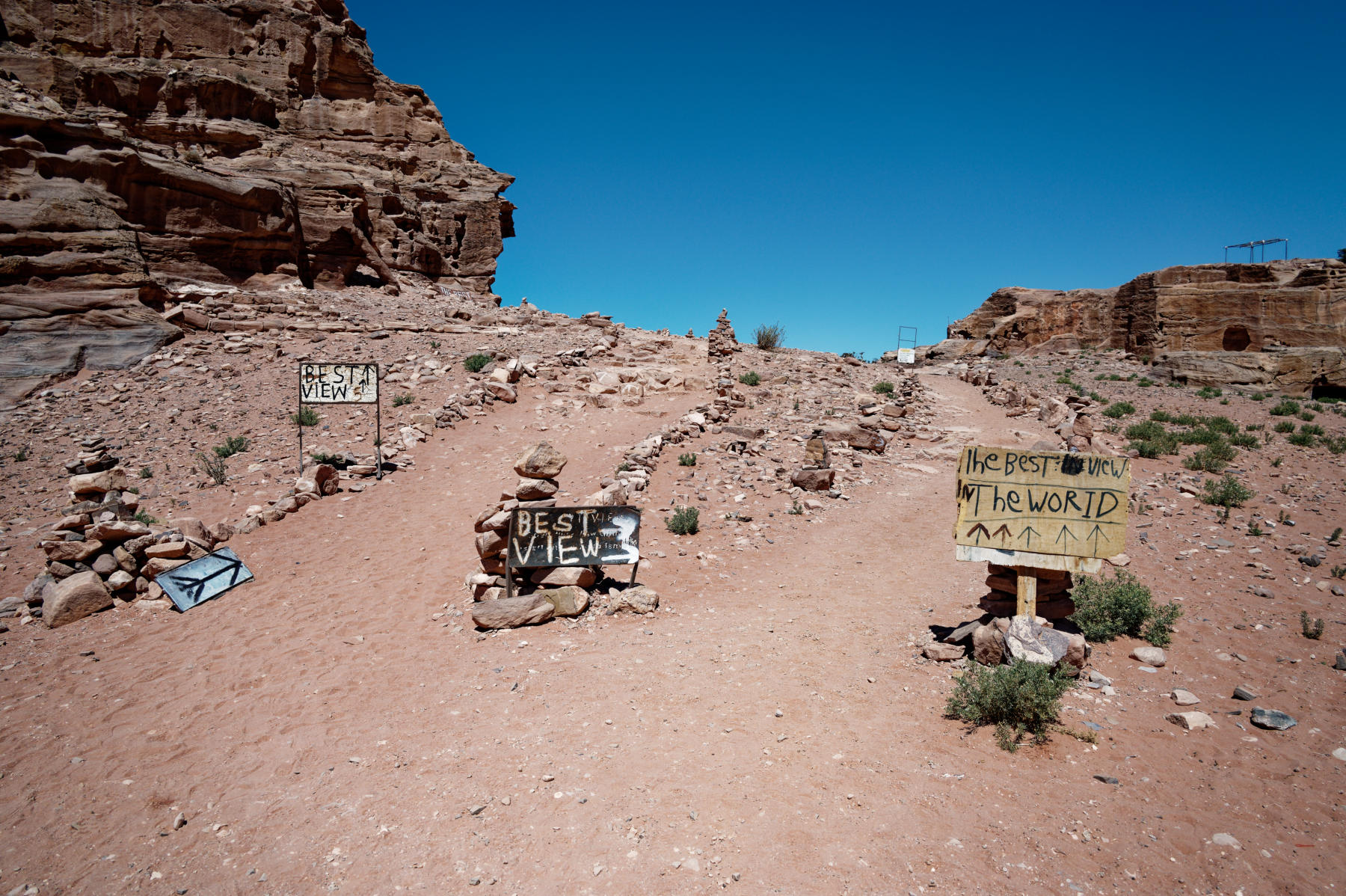
The view was sensational! When we were in Jordan, a tea stop above Petra advertised itself as having the best view in the world, but, frankly, what we saw knocked that into a cocked hat. Here’s a taster.
I don’t believe I’ve ever been been fortunate enough to take as many worthwhile photos as I managed on this flight, all the way from Vancouver to Juneau, before the weather closed in and clouds obscured the view.
Whilst I was busy taking photos from one side of the plane, Jane was equally busy on the other side, so we have a vast number of excellent images. I won’t bore you with the photos here, but you can see them in this separate post, which is a treasure trove for anyone who is interested in aerial photos of lakes and mountains.
Excellent service, wonderful aerial photos and free no-extra-charge gin & tonic – what a heady combination!
Once the clouds obscured the view, since the same films were on offer today as on yesterday’s flight, I was then free to catch up on the final 2% of the film I had failed to watch to the end – The Batman. It was very much in line with the rest of the film – too dark to see what was happening most of the time, lines muttered in voices too hoarse to understand what was going on and plotted in such a manner that the first two drawbacks made the whole thing an incomprehensible mess. But I’d nothing better to do and nowhere else to go, so I got a sort of grim sense of closure out of wasting those extra few minutes of my life.
When we arrived at Anchorage it became apparent that the passport check that we’d undergone in Vancouver represented the international border with the USA, because we simply walked out to the baggage carousels with no further checks. It took a few minutes for the bags to arrive which we spent in amiable travel bragging with a couple who had been seated behind us in the plane; they were very obviously very well-travelled and we are polite people, so we let them win; the upside is that we got a couple of excellent tips for when we travel to the antipodes.
Whilst we were awaiting our bags, the driver who had been booked to take us into town joined us by the carousel and so once we’d picked them up we were swiftly off for the 15-minute drive to the Hilton Anchorage hotel, which will be our home for the next two nights. The weather was cool – just about 13°C, and slightly drizzly – but we’re optimistic that it will be dry tomorrow.
Our most important task is to arrange for pre-cruise Covid tests, theoretically available just down the road from the hotel. Our cruise line, Silversea, runs (at least on paper) a desk in the hotel lobby and so we hope to get firm guidance about testing there. Once tested, we hope to take a trolleybus tour of Anchorage to get some kind of idea about the place. That will be the subject of tomorrow’s entry, so do please come back and join me there.